

2026-06-08 Posted by TideChem view:525
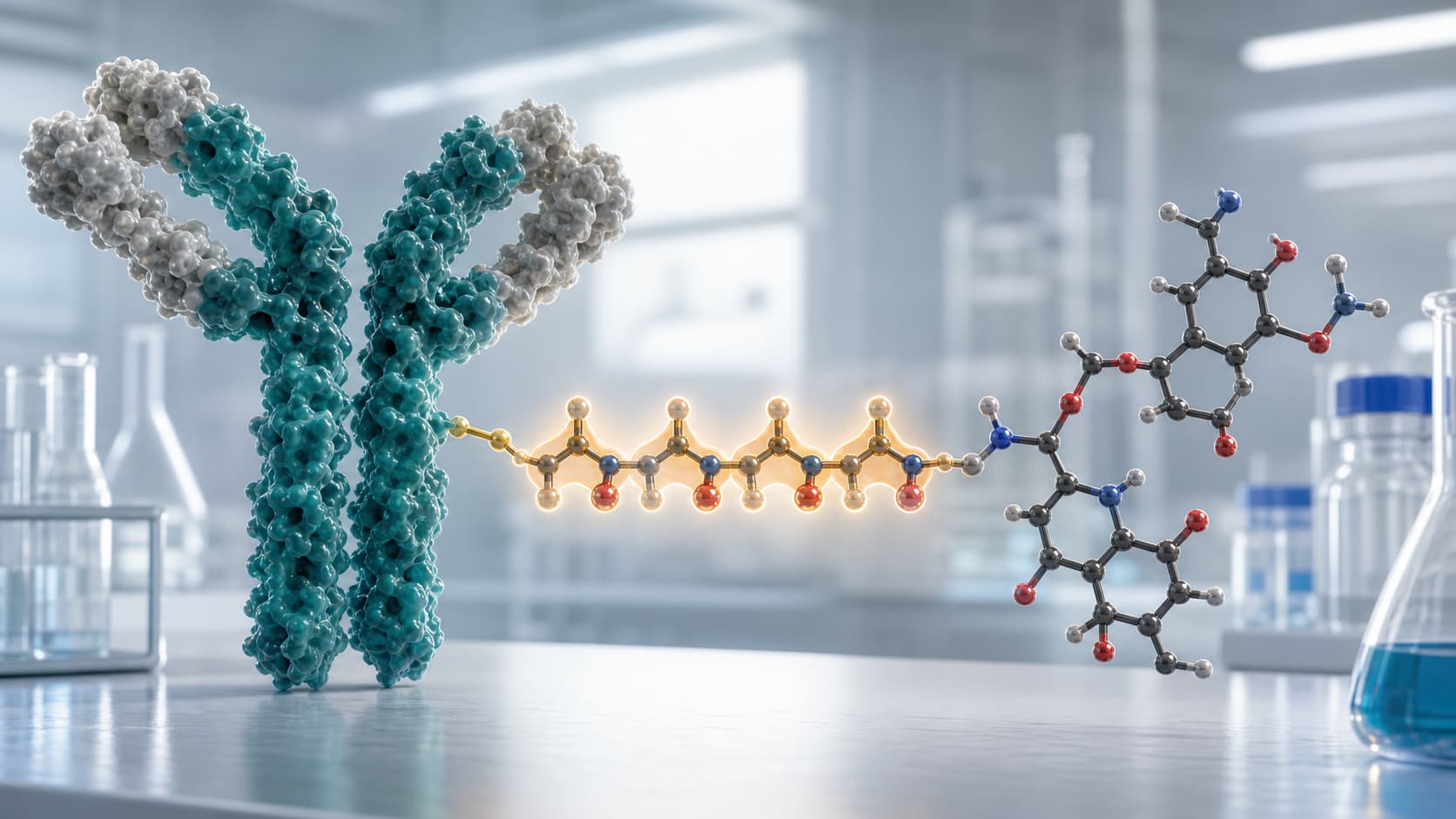
A GGFG linker is a peptide-based cleavable linker commonly discussed in the development of antibody-drug conjugates, also known as ADCs. GGFG stands for Gly-Gly-Phe-Gly, a four-amino-acid sequence made of glycine, glycine, phenylalanine and glycine.
In an ADC, the linker sits between two important parts: the antibody and the payload. The antibody helps guide the drug conjugate toward cells expressing a target antigen, while the payload provides the cytotoxic effect after release. The linker must hold these two parts together during circulation, yet allow payload release after the ADC reaches the target cell and enters intracellular compartments.
That balance is the reason linker design is so important. A linker that is too unstable may release payload too early. A linker that is too stable may reduce intracellular payload release. The GGFG linker is designed to support both systemic stability and enzymatic cleavage after cellular uptake.
GGFG is the amino acid sequence:
Glycine-Glycine-Phenylalanine-Glycine
In peptide notation, this is written as Gly-Gly-Phe-Gly or simply GGFG.
Each residue contributes to the linker’s overall behavior. Glycine provides flexibility because of its small side chain. Phenylalanine introduces a hydrophobic aromatic residue, which can influence recognition and cleavage by proteolytic enzymes. Together, the tetrapeptide creates a cleavable spacer that can be incorporated into ADC linker-payload systems.
In pharmaceutical development, GGFG is not usually evaluated as an isolated peptide only. It is studied as part of a complete linker-payload architecture, which may also include a conjugation handle, spacer elements and a drug payload.
The main purpose of a GGFG linker is to help control where and when the payload is released.
For ADCs, the ideal linker should:
GGFG linkers are often associated with protease-cleavable ADC systems. After the ADC binds to its antigen and is internalized, it can traffic to lysosomes, where enzymes can cleave the linker and release the payload or an active payload species.
This mechanism is especially relevant for deruxtecan-based ADC platforms. For example, the current DailyMed label for ENHERTU describes fam-trastuzumab deruxtecan-nxki as an ADC composed of a HER2-directed antibody, a topoisomerase I inhibitor and a tetrapeptide-based cleavable linker. It also describes intracellular linker cleavage by lysosomal enzymes after HER2 binding and internalization.
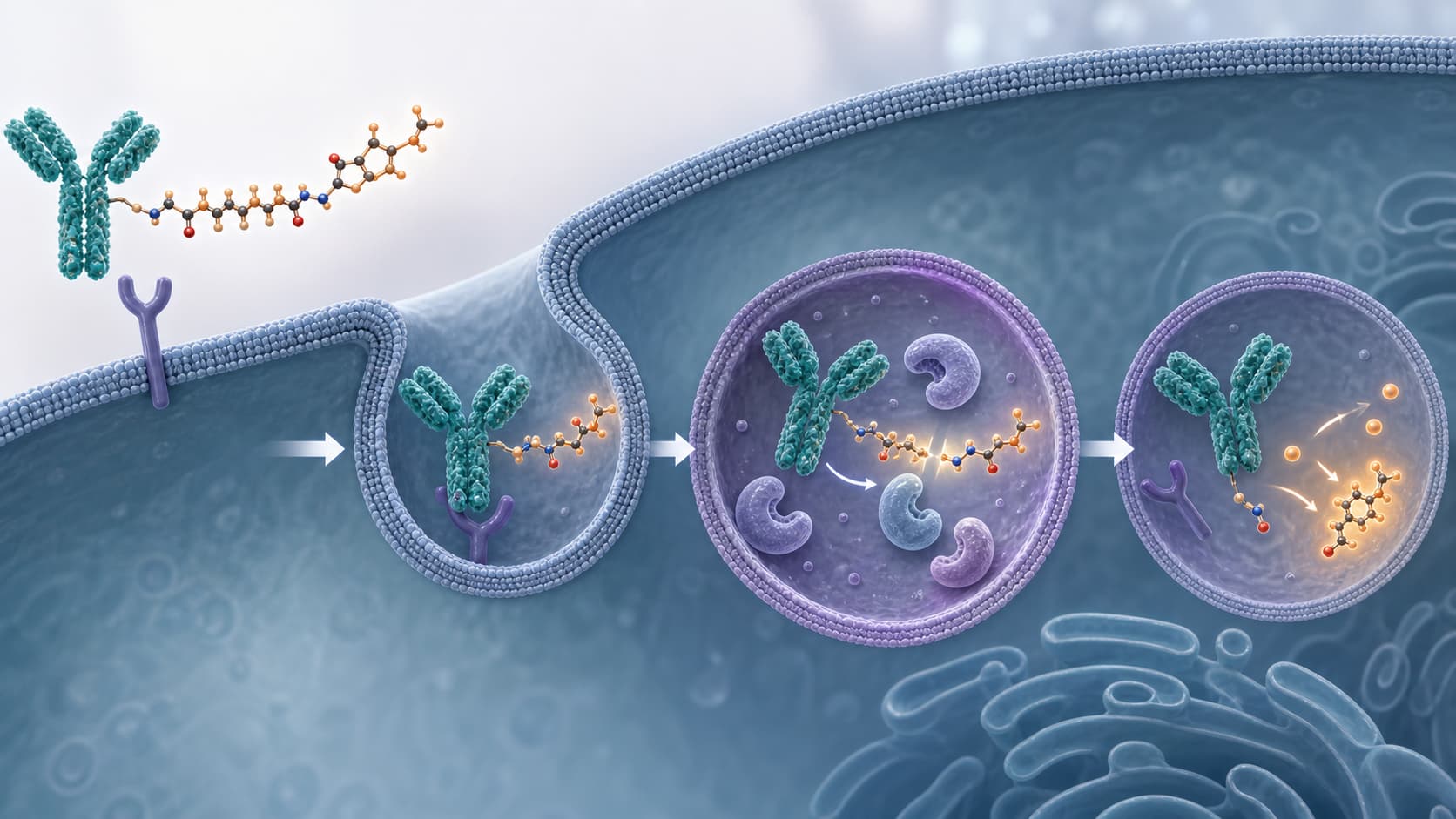
A GGFG linker is designed to function through a sequence of biological and chemical events.
First, the ADC circulates in the bloodstream with the antibody, linker and payload connected. During this stage, linker stability is important because premature payload release can reduce the therapeutic index and increase off-target toxicity.
Second, the antibody binds to the target antigen on the surface of a cell. For a target-expressing tumor cell, this binding can trigger internalization of the ADC-antigen complex.
Third, the internalized ADC traffics into endosomal and lysosomal compartments. Lysosomes contain proteolytic enzymes that can process peptide-based linkers.
Finally, cleavage of the GGFG-containing linker helps release the payload or a payload-containing active species. The released payload can then act on its intracellular target, depending on its mechanism of action.
This process is one reason peptide linkers remain important in ADC design. They create a biologically responsive release mechanism rather than relying only on chemical instability.
The GGFG linker is closely associated with deruxtecan linker-payload technology. Deruxtecan includes a protease-cleavable tetrapeptide linker and a topoisomerase I inhibitor payload known as DXd, an exatecan derivative.
This linker-payload design supports several important ADC properties:
The bystander effect is especially relevant in tumors with heterogeneous antigen expression. If the released payload can diffuse into nearby cells, it may affect neighboring tumor cells that express lower levels of the target antigen. This property depends on the payload, linker design and tumor biology, so it should not be generalized across all ADCs.
ADC linkers are often grouped into cleavable and non-cleavable linkers.
Cleavable linkers are designed to release payload under specific biological conditions. These may include enzymatic cleavage, acidic pH or high intracellular reducing conditions. GGFG belongs to the peptide-cleavable linker category.
Non-cleavable linkers rely on antibody degradation after internalization. In these systems, the payload is released as a drug-linker-amino acid species after the antibody is broken down.
Compared with many non-cleavable linkers, a GGFG-type cleavable linker can provide more direct enzymatic payload release. Compared with some chemically labile linkers, peptide linkers may offer better control when matched with the right payload and conjugation chemistry.
The best linker choice depends on the target antigen, internalization rate, payload class, therapeutic window, species cross-reactivity, manufacturing process and intended clinical profile.
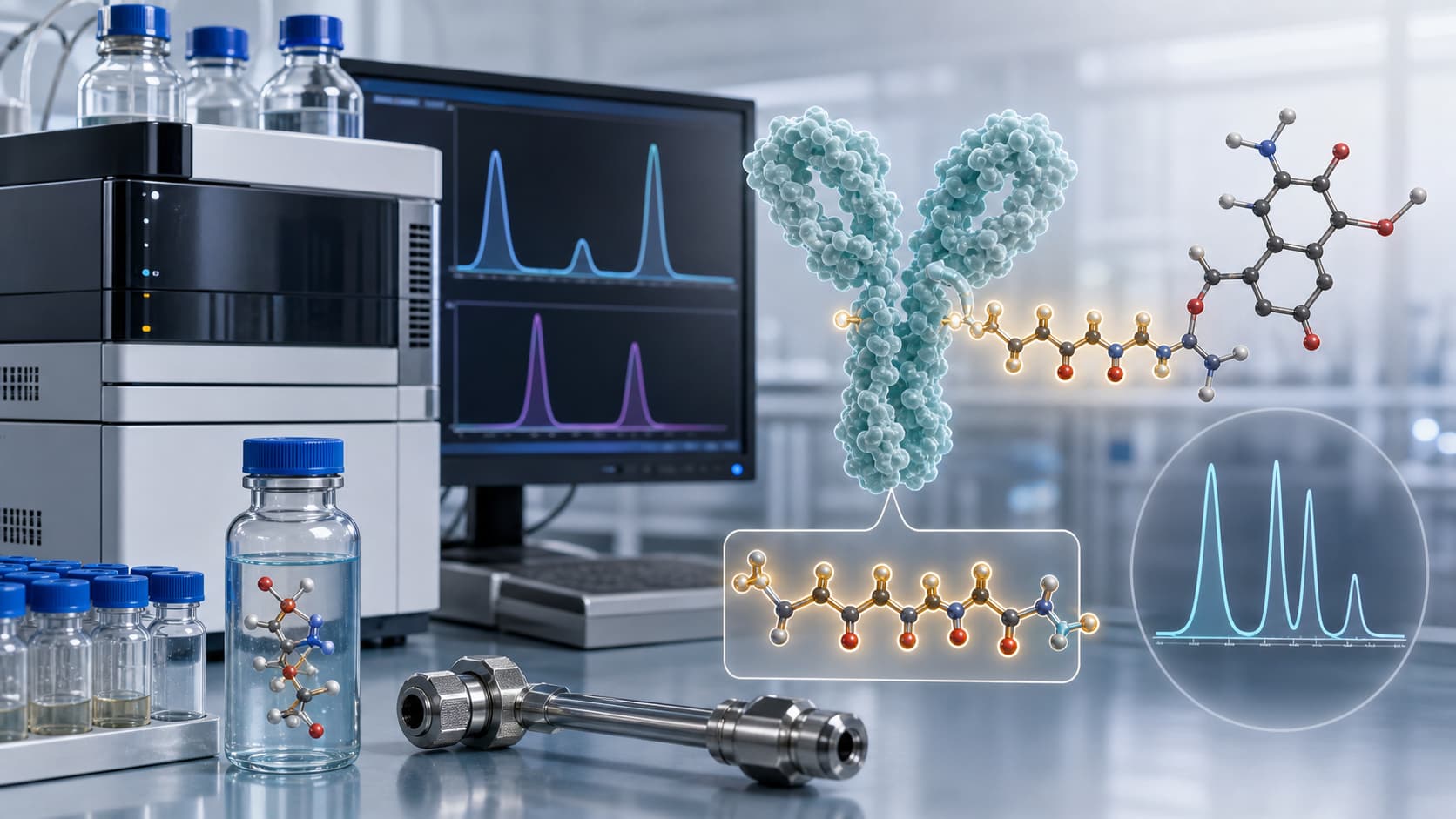
For research and pharmaceutical teams, the GGFG linker is not only a design feature. It is also a manufacturing and quality-control challenge.
Important development considerations include:
Analytical methods may include LC-MS, HPLC, hydrophobic interaction chromatography, size-exclusion chromatography, capillary electrophoresis and peptide mapping. The exact method package depends on the ADC structure and development stage.
A well-designed GGFG linker can offer several advantages in ADC development.
First, it provides a clear enzymatic release concept. The peptide sequence can be processed after internalization, supporting intracellular payload release.
Second, it can be integrated into linker-payload systems with potent cytotoxic drugs. This is important because ADC payloads often require careful handling and precise control.
Third, it can support modern ADC design strategies where high potency, controlled release and manufacturability must be balanced.
Fourth, it has practical relevance because GGFG-containing linker-payload systems are associated with clinically important deruxtecan-based ADCs.
GGFG linkers are useful, but they are not automatically suitable for every ADC program.
Potential limitations include:
A GGFG linker should therefore be evaluated as part of the complete ADC system. The antibody, target antigen, conjugation site, payload, spacer, DAR and formulation all influence final performance.
When deciding whether a GGFG linker is appropriate, researchers usually consider several questions.
Does the target antigen internalize efficiently?
A cleavable linker is most useful when the ADC can reach intracellular compartments where cleavage occurs.
Is the payload suitable for intracellular release?
The payload should remain potent after release and have the intended intracellular mechanism.
Is bystander activity desirable?
For heterogeneous tumors, bystander killing may be beneficial. For targets expressed near sensitive normal tissues, it may raise safety concerns.
Can the linker-payload be manufactured consistently?
Peptide linker synthesis, payload coupling and conjugation all need reproducible control.
Can the ADC be characterized analytically?
A linker strategy is only useful if the product can be measured, controlled and released under appropriate quality standards.
A GGFG linker is a Gly-Gly-Phe-Gly peptide linker used in selected ADC linker-payload systems. Its main role is to connect an antibody to a payload while supporting enzymatic cleavage after cellular internalization.
For researchers, the GGFG linker is important because it links molecular design with biological release. For pharmaceutical teams, it matters because it affects stability, payload release, analytical control, manufacturability and ultimately the quality profile of an ADC product.
A successful GGFG linker strategy is not defined by the peptide sequence alone. It depends on how the linker works with the antibody, target, payload, conjugation chemistry and formulation. In ADC development, that full-system view is what turns a linker from a chemical connector into a functional drug-design element.
A GGFG linker is a peptide linker with the sequence Gly-Gly-Phe-Gly. It is used in selected antibody-drug conjugates to connect an antibody to a cytotoxic payload.
GGFG stands for glycine-glycine-phenylalanine-glycine.
Yes. GGFG is generally used as a protease-cleavable peptide linker in ADC linker-payload systems.
GGFG linkers help maintain ADC stability during circulation while allowing payload release after internalization and lysosomal processing.
No. GGFG and valine-citrulline are both peptide-based cleavable linker motifs, but they are different sequences and may behave differently depending on the complete linker-payload system.
Deruxtecan-based ADCs are strongly associated with a tetrapeptide-based cleavable linker system that includes the GGFG motif.
References:
DailyMed: ENHERTU Prescribing Information